



Which sharps bin do I need?
The right sharps bin keeps staff safe and keeps you compliant. Choose by what’s going in it, where it will be used, and how quickly it fills.
The short answer
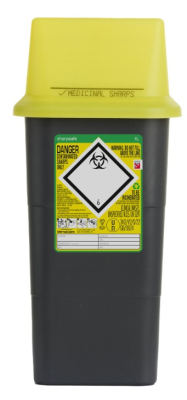
- Yellow lid: sharps contaminated with medicines (other than cytotoxic or cytostatic).
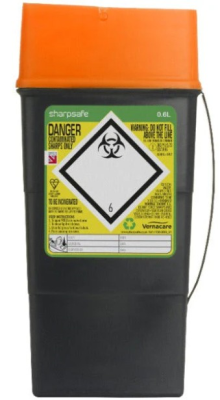
- Orange lid: sharps not contaminated with medicines.
- Purple lid: sharps contaminated with cytotoxic or cytostatic medicines.
- Choose the smallest bin that suits the task, and take it to the point of use.
Shop by type
Choosing a size
| Size | Typically used for |
|---|---|
| Small (under 1 litre) | Doctor’s bags, home visits and community nursing |
| Medium (around 1 to 5 litres) | Consulting rooms, treatment rooms and vaccination clinics |
| Large (around 7 litres and above) | Busy treatment rooms, phlebotomy and high-volume clinics |
Safe use, every time
Assemble and label
Assemble the bin correctly and complete the label when you start using it.
Don’t overfill
Never fill above the fill line. Close and lock the bin when it is around three-quarters full.
Use the temporary closure
Close the aperture between uses, and keep bins off the floor and out of reach.
Free download: Our clinical waste and sharps guide explains the full colour-coding system and what to do after a sharps injury. Get it free from our GP resources library.
Common questions
Can I put a used vial in a sharps bin?
Partially used medicine vials and ampoules usually go in a yellow-lidded bin. Follow your waste contractor’s guidance.
How long can a sharps bin be in use?
Follow your local policy and your contractor’s guidance. Many organisations set a maximum time, even if the bin isn’t full.
Who collects full sharps bins?
A licensed clinical waste contractor. We can help with clinical waste collection too.
Keep reading
Not sure what’s right for you?
Call our team on 020 3301 6500 or email help@medical-supermarket.com and we’ll recommend the right product, at the right price.